
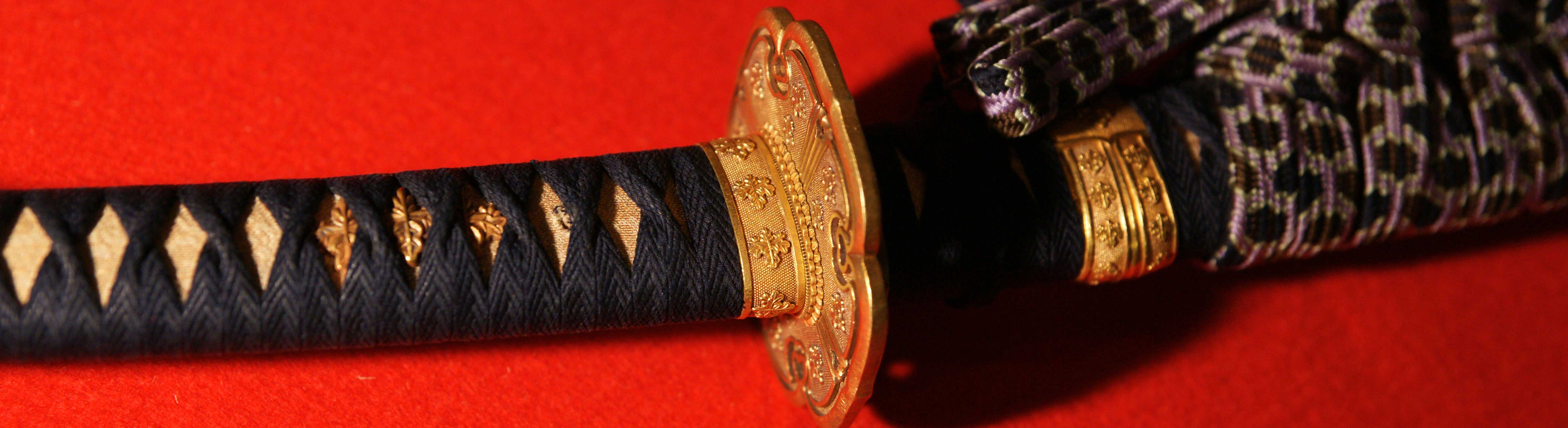
About Artisans of Japanese Swords Exhibition
展覧会The Society for the Promotion of Japanese Sword Culture
We are pleased to announce that for the first time in three years, we will be holding the “Artisans of Japanese Swords Exhibition” at the Meiji Jingu Treasure Museum. The sword has been a part of traditional Japanese culture since mythological times and is a symbol of the imperial lineage by its inclusion as one of the three items of the imperial regalia: the sword, the jewels and the mirror. This uninterrupted lineage continues to this day with the current 126th Emperor.
Shikishima no Yamato gokoro wo migakazuba,
Tsurugi obutomo kainakaramashi
This waka poem, composed by Emperor Meiji in 1904, states that no matter how hard you train and learn to use a sword, it is meaningless unless you also refine and cultivate your Yamato Spirit (Japanese mindset). This sentiment shows us how much Emperor Meiji valued the Spirit of the Japanese people.
There is an anecdote that the Emperor Meiji always kept a sword close to him and would admire its beauty. Japan achieved dramatic growth during the 45 years of the Meiji era, and built a modern nation on a par with the rest of the world. During times of great trouble for the nation, Emperor Meiji while pondering governmental affairs, would seek solace by viewing his sword, and through doing so, was compelled to compose such an awe-inspiring poem. We who are living in the present age should also take heed from his example.
In an effort to deepen the understanding of Japanese sword culture to a wider audience, the exhibition, Emperor Meiji and Japanese Swords, is being held at the Meiji Shrine Treasure Museum. It consists of various works by contemporary sword craftsmen. We believe that being able to exhibit swords at such a prestigious venue as Meiji Shrine with such a deep connection to Emperor Meiji We hope that the exhibition and events will attract not only people who already have an interest in swords, but also newcomers and international visitors.
The Treasure Museum, which was completed in 1921, is imbued with the historic atmosphere of over 100 years ago.


